Why Wine Is Sensitive in Winter
Wine is a living product whose quality depends heavily on storage conditions. Especially in winter, when temperatures in cellars often drop significantly, the question arises: What chemical changes occur in wine during prolonged cold spells? The answer depends on how long you plan to store the wine—and how much the temperature fluctuates.
"Frequent temperature fluctuations of ±5 degrees or more throughout the year are detrimental to the wine."
What Happens to Wine in Cold Weather
Wine is a liquid and reacts to changes in temperature. When the temperature drops—especially below 10 °C—the wine contracts. This creates a vacuum inside the bottle, which pulls the cork slightly inward. Since no closure is completely airtight, oxygen is drawn into the bottle, which can permanently impair the wine’s quality. When temperatures rise again, the wine expands and creates excess pressure—this constant fluctuation in pressure puts additional strain on the cork.
Oxidation: A Slow Process
The main danger posed by oxygen is oxidation. It makes the wine taste flat and dull and affects its color. While cold temperatures slow down oxidation, this merely postpones the problem: The oxygen remains in the wine and reacts later, when the temperature rises. As a result, the wine’s quality can suddenly deteriorate rapidly in the spring.
Temperature Fluctuations and Wine Crystals
In the long term, repeated fluctuations pose the real danger: The constant shift between negative and positive pressure allows oxygen to seep in continuously, and these effects accumulate over several years. Added to this is a second issue—tartar: At low temperatures, tartaric acid can dissolve and crystallize. These crystals are harmless to health but can slightly alter the taste and appearance, especially in white wines.
Storing Wine in Winter: Tips for Short Cold Spells
Even though long-term fluctuations can be problematic, short cold spells can be easily weathered with the right measures:
- Insulation:Styrofoam boxes or insulating mats help mitigate temperature fluctuations—they’re inexpensive and available at home improvement stores.
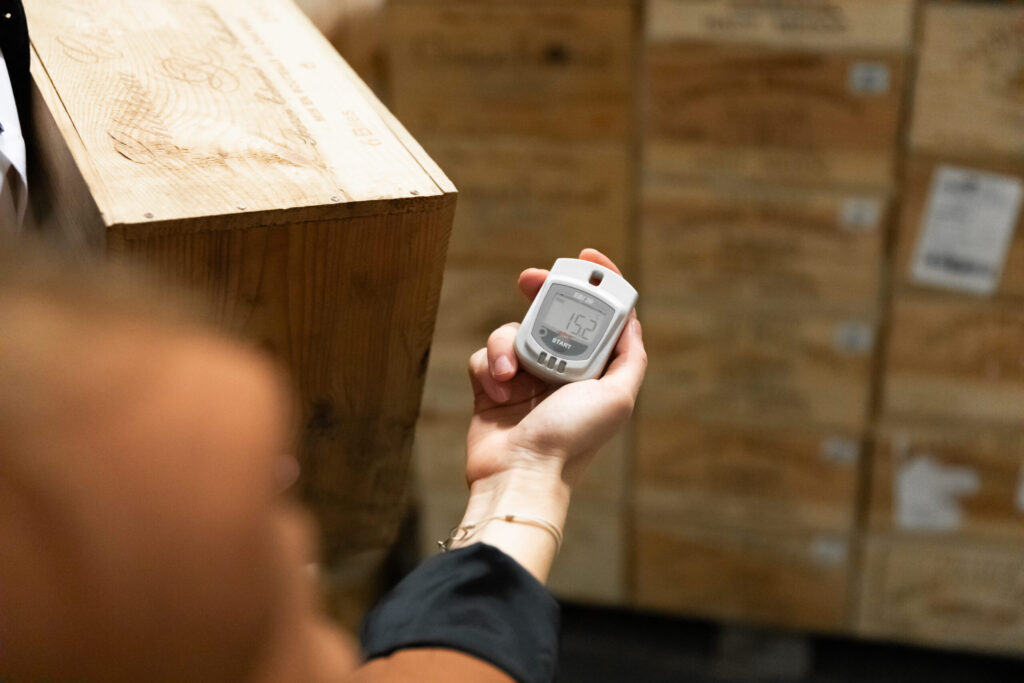
- Relocation:In extremely cold weather, temporarily move your bottles to a warmer room, such as a utility room. Professional storage services like Wine Wallet offer optimal conditions year-round.
- Frost protectors or heaters:keep the basement temperature above critical levels; thermostats shut off automatically.
- Wine refrigerator:ideal for a small wine collection—consistent conditions, but more expensive and takes up space.
Conclusion: Consistent conditions pay off
Measures to protect against cold and temperature fluctuations often involve a lot of effort: insulation, heating devices, or relocating your wine collection all require planning and maintenance. In the long run, it’s worth considering professional storage that guarantees consistent conditions—so you can enjoy your wines at their best. Cheers!